Real Estate Podcasting: The Complete Guide for Agents and Brokers
Introduction: What Makes Podcasting A High-Value Channel for Real Estate Right Now?
Podcasting is having its moment.
And unlike other platforms, it's not owned by a single company, it's not subject to algorithm changes that tank your reach overnight, and it's not a pay-to-play game where the biggest ad budget wins.
For real estate agents battling for attention in crowded channels, podcasting is the next big opportunity.
The numbers back this up. Podcast listening in the U.S. has more than doubled since 2017. As of 2025, 55% of American adults — 158 million people — listen monthly. Forty percent tune in weekly. By 2027, projections show 254 million monthly listeners, a 48% jump from 2024.
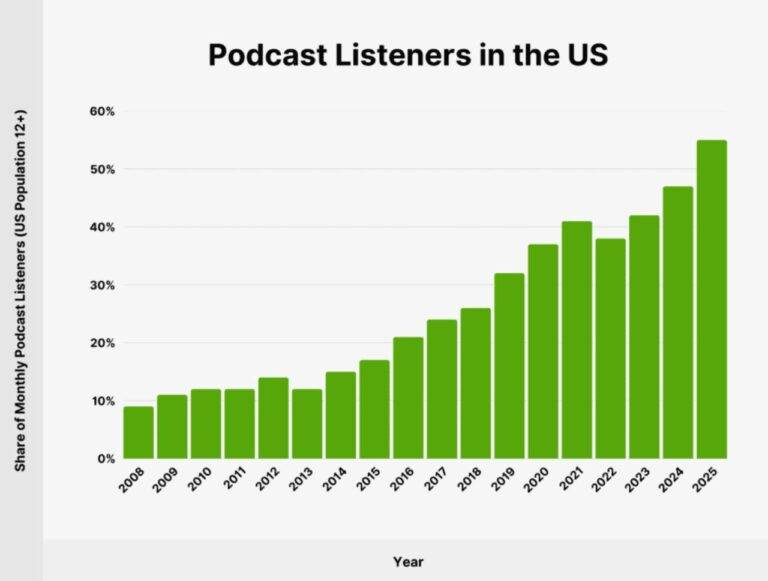
Podcasting is a new way people consume information, build trust, and decide who to do business with.
And here's what makes this interesting for you: most real estate agents haven't figured this out yet.

They're still fighting over Zillow leads. Still paying for Facebook ads that cost more every quarter. Still posting the same "Just Sold!" content that their sphere scrolls right past. Still cold calling people who hang up after three seconds.
Meanwhile, podcasting sits there, a relatively cheaper, dramatically less saturated channel to market yourself, broaden your network, amplify your reach, and actually build something that compounds over time.
If you're a real estate agent looking for an edge that doesn't require outspending your competition, this is it.
Here's why you shouldn't be sleeping on podcast marketing — and how to actually make it work.
So what is real estate podcasting?
Real estate podcasting is the practice of creating and distributing audio (and often video) content specifically designed to serve buyers, sellers, investors, or fellow agents within the real estate industry.
Unlike traditional marketing channels, cold calls, door knocking, or even blog posts, podcasting allows agents and brokers to build relationships at scale through the intimacy of voice.
What makes podcasting different from blogs, social media, or cold outreach?
Three things:
- Passive consumption: Listeners tune in during commutes, workouts, or household chores, times when they can't read or watch a video.
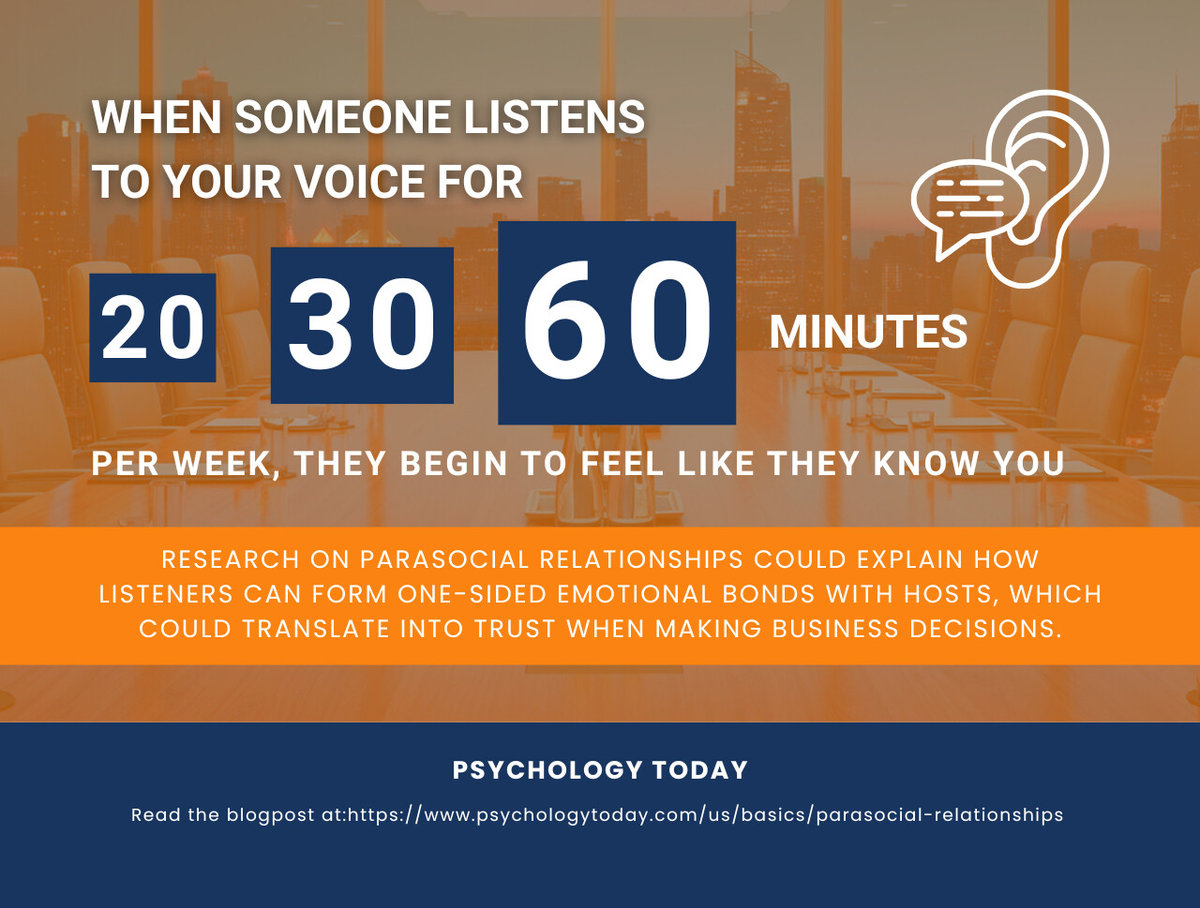
- Trust through voice: Hearing someone speak creates a parasocial relationship that text simply cannot replicate.
- Long-form depth: A 30-minute episode allows you to demonstrate expertise in ways a 60-second reel never could.
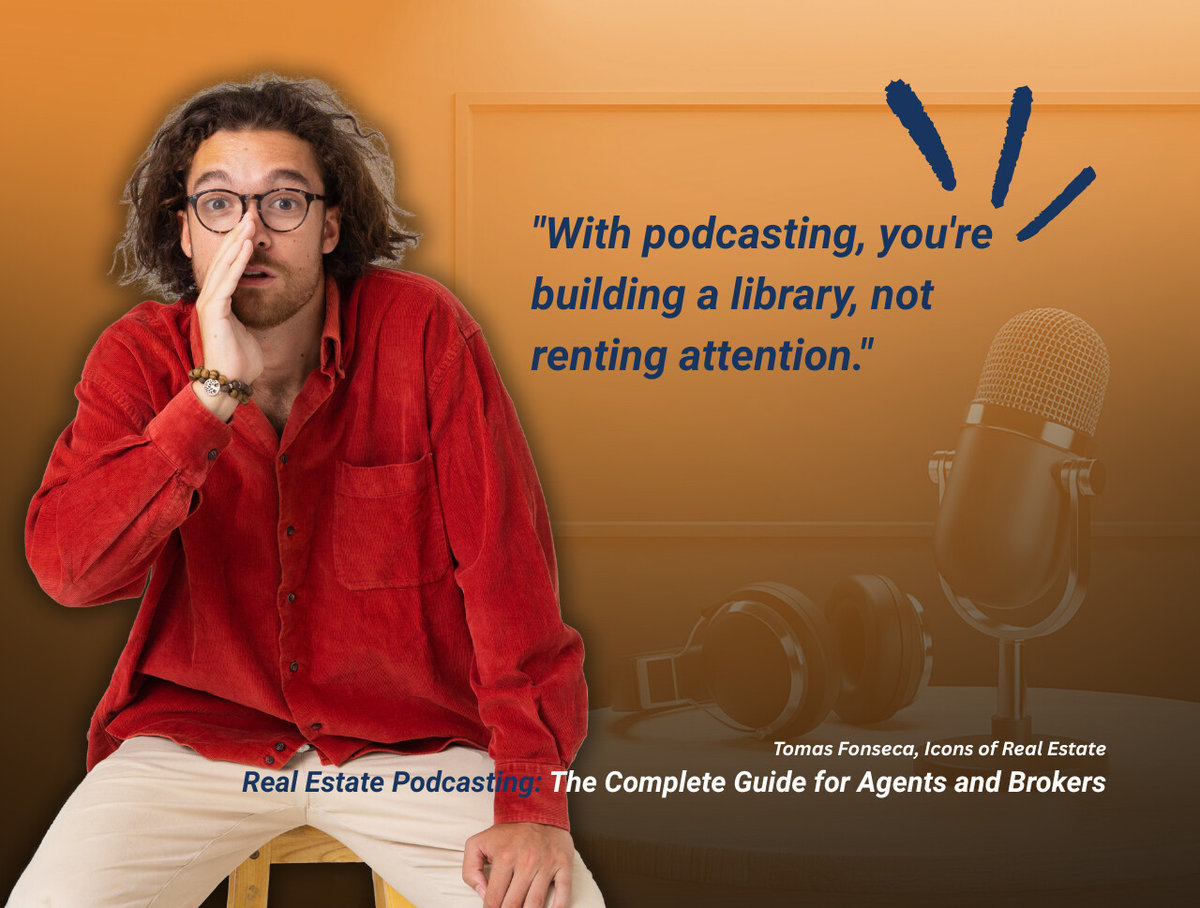
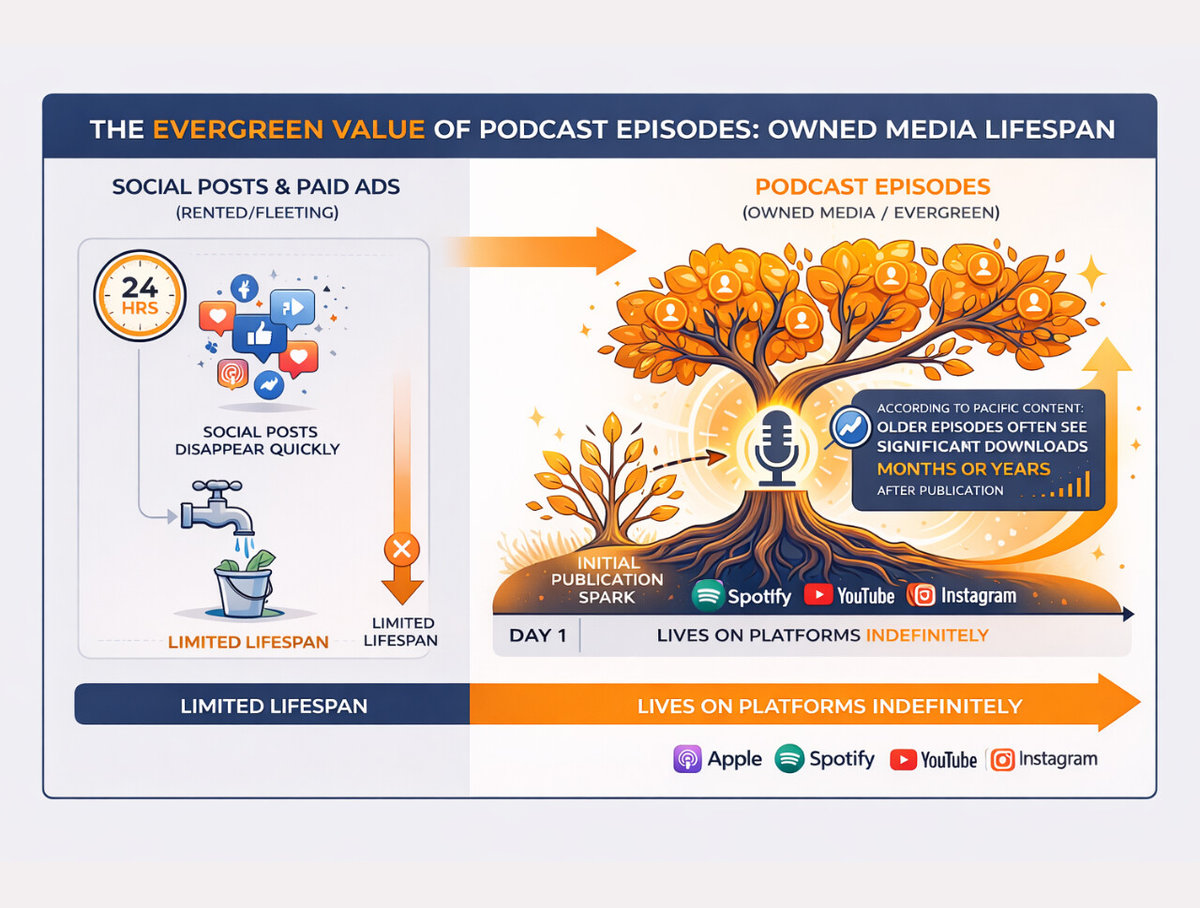
- Evergreen content: That Instagram post you made? Dead in 24 hours. A podcast episode keeps getting downloads months — even years — after you publish it. You're building a library, not renting attention.
- You own the relationship: Social media algorithms decide who sees your content. When someone subscribes to your podcast, they get every episode — no filtering, no pay-to-play, no platform deciding your reach for you.
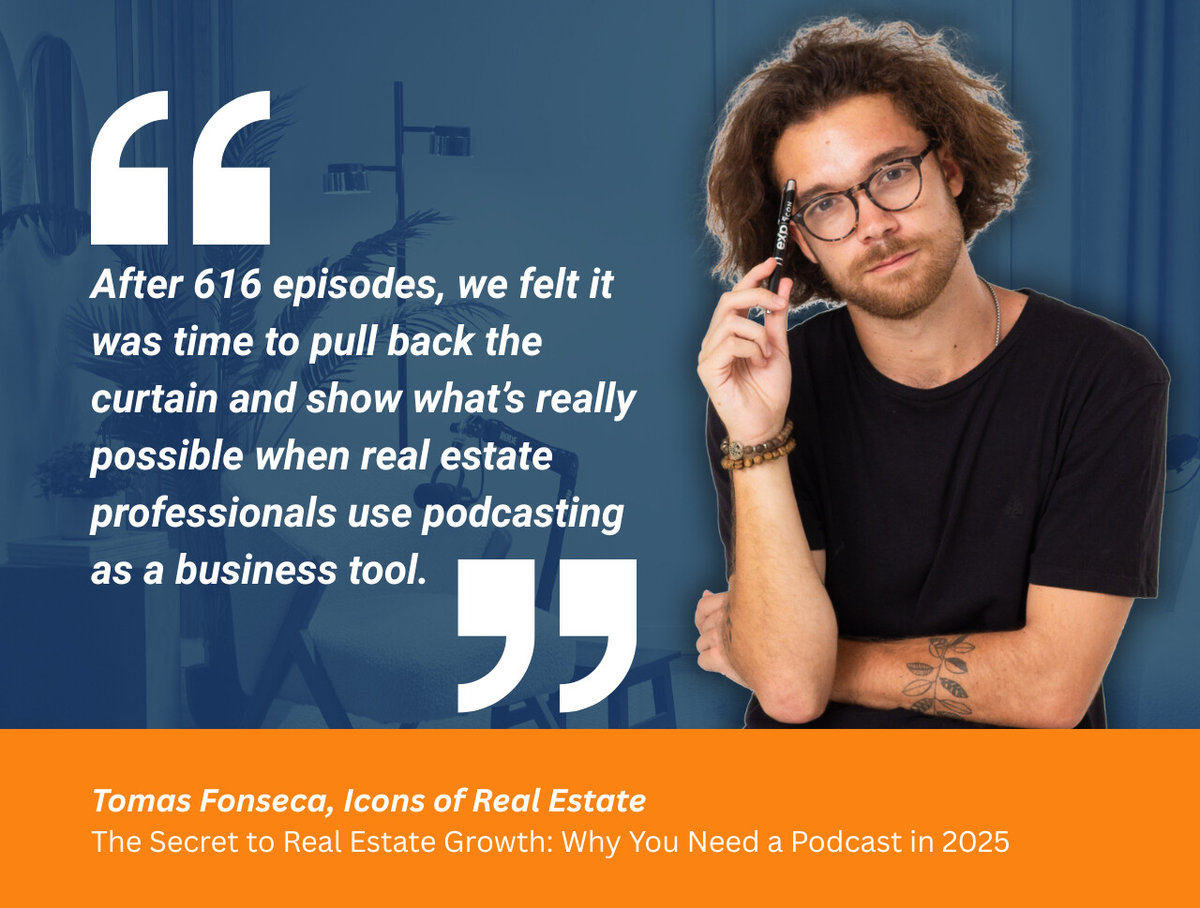
This guide comes from Icons of Real Estate, a company with a mission to help agents grow through podcasting. After producing thousands of episodes and launching over 100+ agent-hosted shows across the U.S., Icons has developed frameworks and strategies that work in the real world, not just in theory. |
Whether you're brand new to content creation or looking to refine an existing show, this guide includes real estate podcast tips for agents of all levels.
Video Resource: The ULTIMATE PODCAST GUIDE to BOOST YOUR BUSINESS
Why Podcasting Works for Real Estate Agents
Podcasting solves the fundamental problem of modern marketing: attention scarcity. Your prospects are bombarded with ads, emails, and social posts. A podcast cuts through that noise by offering genuine value over time.
Here's why podcasting for real estate agents offers a unique long-term advantage over other channels:
Builds Trust Through Voice and Consistent Visibility
Strengthens Personal Brand Beyond And In Your Local Market
You want to be the name people think of when they think of real estate in your area. The agent everyone knows. The one who shows up in search results, in conversations, in recommendations.
A podcast does that.
When you consistently publish episodes about your market — the neighborhoods, the trends, the insider knowledge only a local expert would have — you become the authority. Not just another agent with a license. The agent for that area.
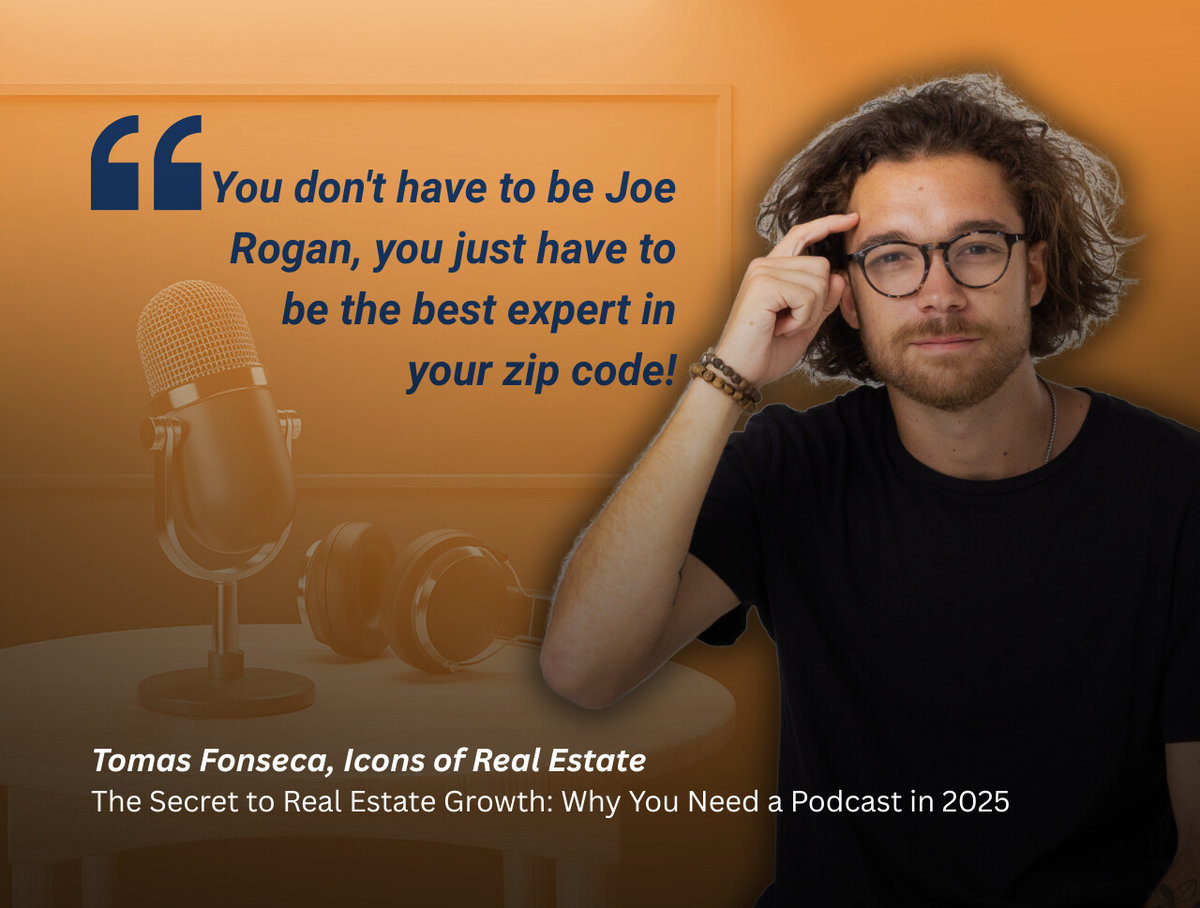
And here's the bonus: while you're dominating locally, your reach expands beyond your zip code too. Referral partners in other markets discover you. Investors from out of state find your show when researching your area. Relocating buyers listen before they ever land in your city.
Even more, a podcast isn't geographically limited. An agent in Austin can attract referral partners in Miami, or an investor in Toronto can discover your expertise in Phoenix. This expanded reach creates opportunities that traditional farming never could.
The Podcasting Format Fits Modern Life
Your audience isn't sitting at their desk waiting to consume your content.
They're commuting. Walking the dog. Folding laundry. Cooking dinner.
Podcasts align with how people actually consume content today:
- On-the-go during commutes
- While multitasking around the house
- In moments when reading or watching isn't an option
This passive consumption creates something powerful: your voice becomes part of their routine.
And because real estate is inherently personal, that matters.
The spoken word conveys emotion, stories, and insights in ways that text simply can't replicate. Through podcasting, you share your expertise in a conversational, relatable manner.
That's what builds connection and trust.
Opens Doors to Referral, JV, and Partnership Opportunities
Inviting guests onto your show is one of the most effective networking strategies in existence. You're not asking for something, you're offering exposure. This flips the typical cold outreach dynamic and positions you as a connector, not a solicitor.
Case in point: Kathy Byrnes.
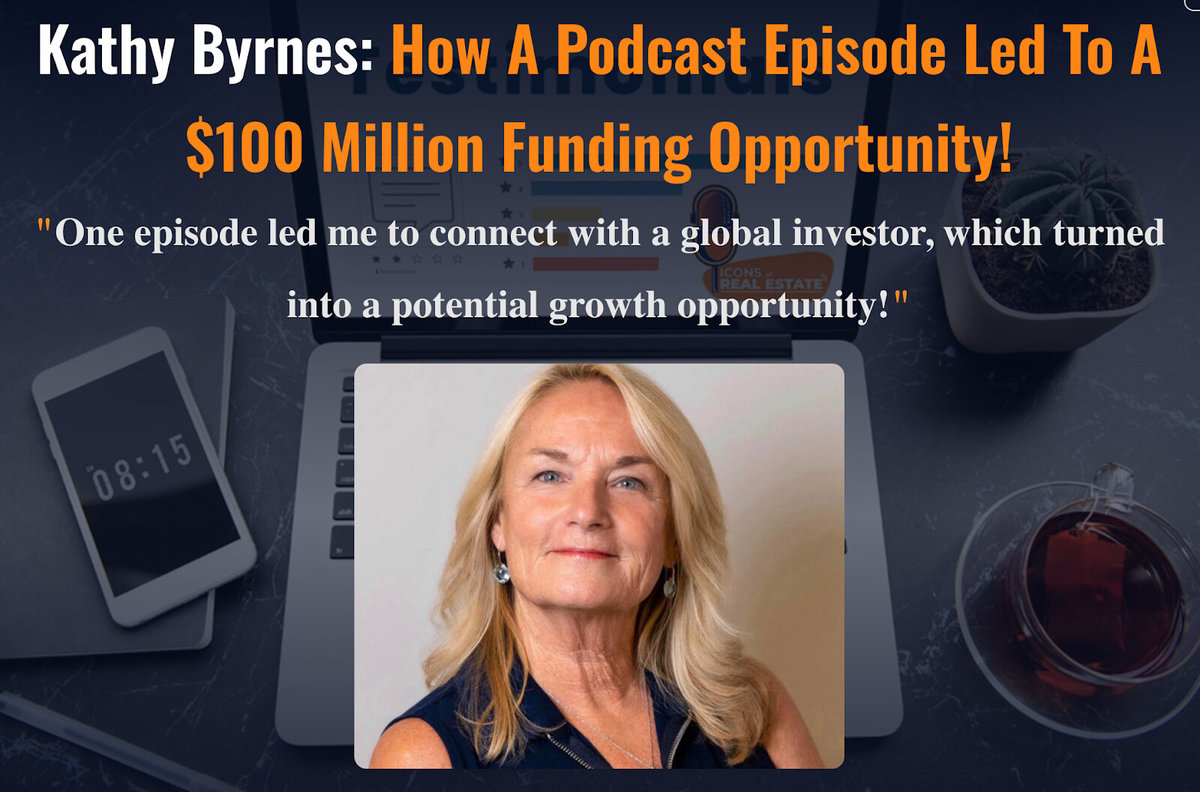
Kathy is a waterfront specialist in North Carolina who launched her podcast, Real Estate Riches, in February 2024. One interview changed everything.
She invited a luxury real estate agent onto her show. Normal episode. Good conversation. Nothing that seemed earth-shattering at the time.
Then the guest mentioned something: she was part owner of a bank offering $100 million+ loans for international real estate investments.
That casual podcast conversation turned into a real business relationship — one that opened doors to global investment opportunities Kathy never would have accessed through traditional networking.
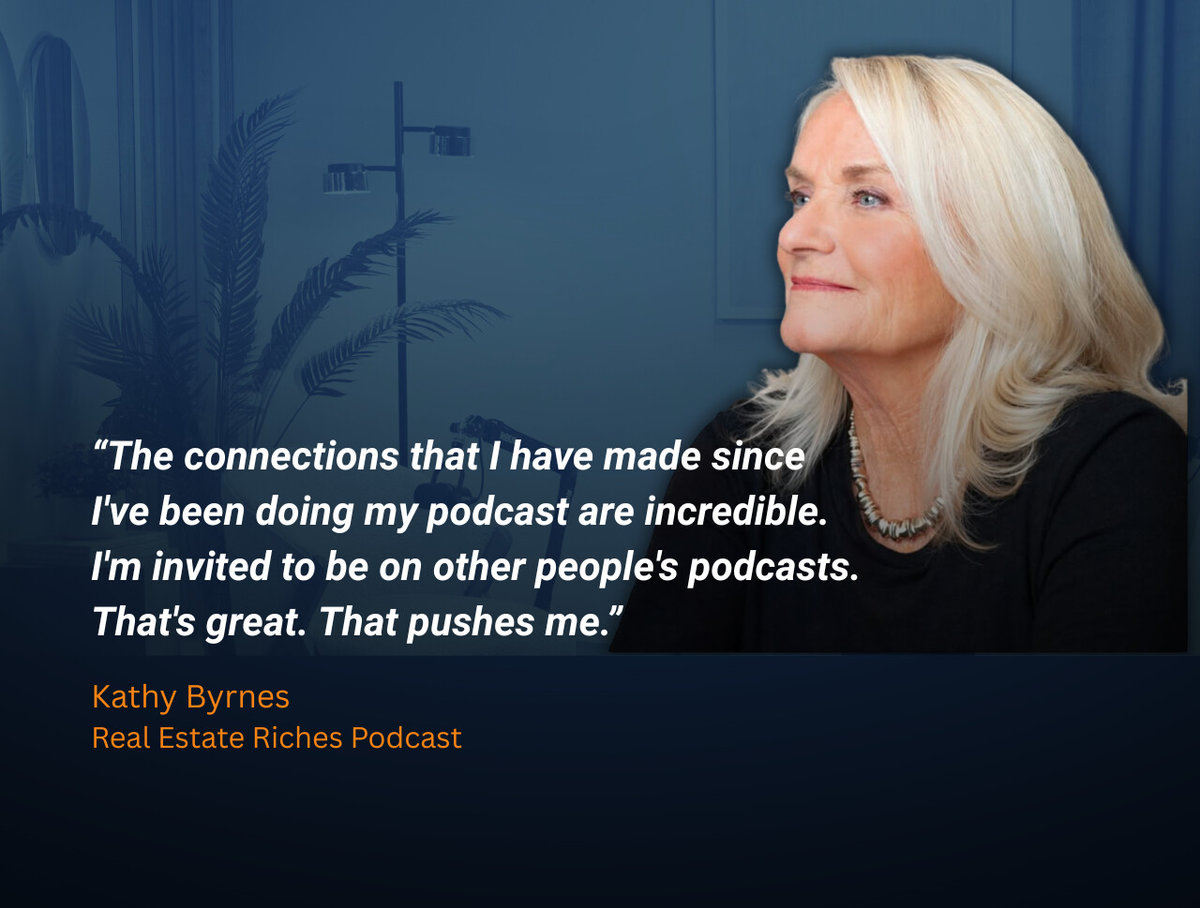
Kathy is 70+ years old. She started her podcast less than two years ago. She's now recorded over 90 episodes, and the show has become a consistent driver of leads, partnerships, and authority in her market.
That's the power of podcasting as a networking tool. You're not cold calling. You're not begging for referrals. You're having conversations that naturally turn into opportunities.
👉 Watch Kathy's full story here
Long-Form Content Creates Deeper Authority
Social media favors brevity. Podcasts favor depth. That depth is what separates "I've heard of that agent" from "I trust that agent with the biggest financial decision of my life."
Real Results from Real Agents:
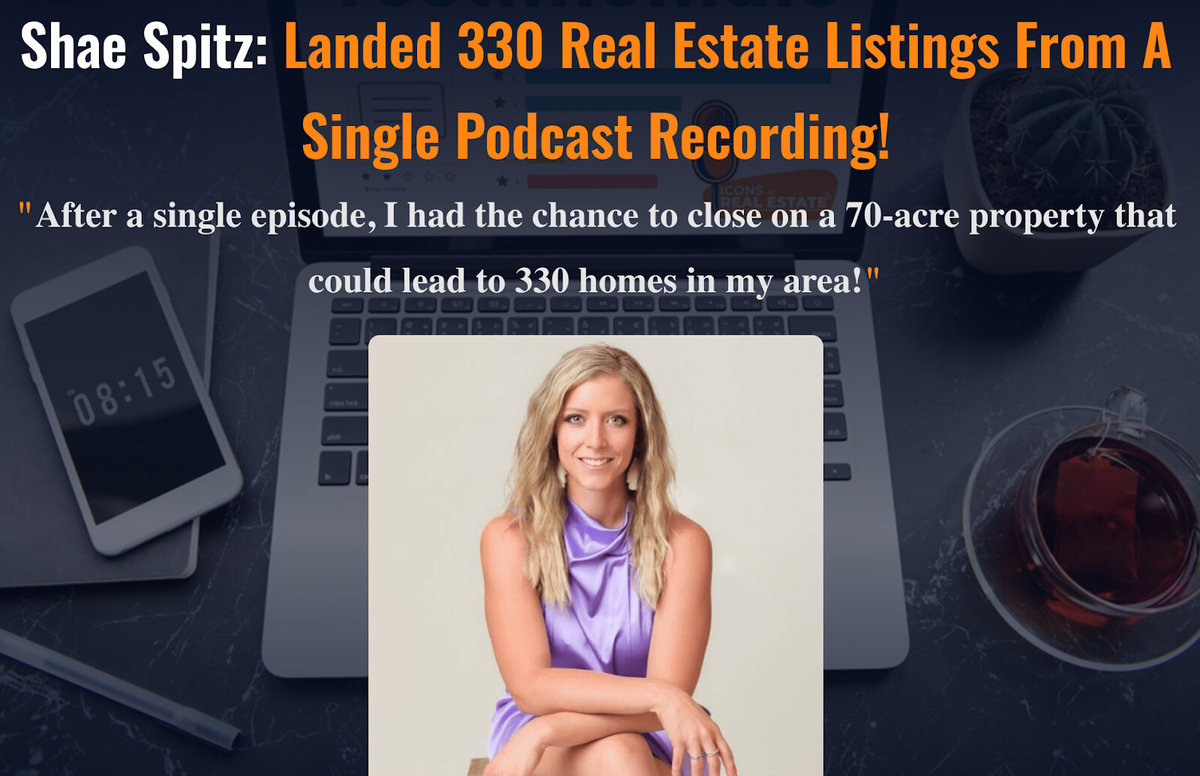
Shay Spitz landed a 70-acre land deal and multi-unit development directly from a podcast guest she interviewed.
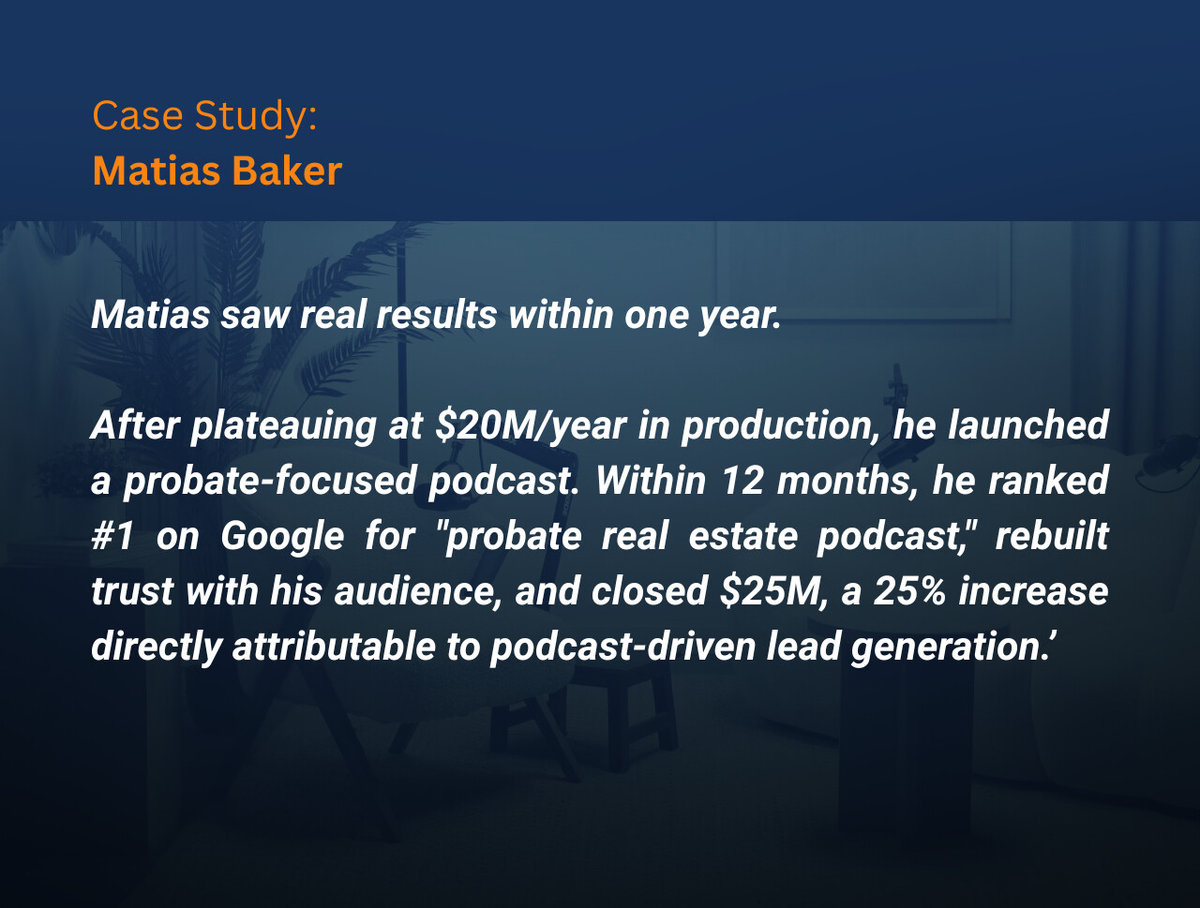
- Matias Baker became the top Google result for "probate real estate podcast" and increased deal flow after plateauing at $20M/year in production.
One early Icons client launched a probate real estate podcast focused exclusively on Beverly Hills. By combining a narrow niche with a defined geography, the show quickly ranked not only locally, but statewide and nationally for probate-related search terms. Prospects arrived pre-qualified and pre-sold, already viewing the host as the go-to expert before the first conversation.
Benefits of Starting a Podcast as a Realtor
Starting a podcast as a realtor delivers compounding returns that few other marketing channels can match. Here's what you gain:
Generates Warm Leads While Building a Media Asset
Every episode you publish is a piece of owned media. Unlike social posts that disappear in 24 hours or ads that stop working when you stop paying, podcast episodes live on platforms like Apple Podcasts, Spotify, and Youtube indefinitely. According to Pacific Content, older podcast episodes often see "evergreen" downloads months or years after publication.
Reach Your Audience Passively
Your listeners consume your content during moments when they can't engage with other media, driving, exercising, cooking. You become part of their routine without requiring their active attention.
Improves SEO and Discoverability
👉 Watch our masterclass: 5 AI-Driven Strategies to Get Featured Before Your Competitors
Podcast transcripts, show notes, and embedded episodes on your website create keyword-rich content that search engines index. That's the traditional SEO benefit, and it still matters.
But here's what's changing: we're moving from SEO to AEO — Answer Engine Optimization.
According to SparkToro's research, roughly 65% of Google searches now end without a click — and that number is climbing as AI overviews resolve queries directly on the search page.
People aren't just Googling anymore — they're asking ChatGPT, Claude, Perplexity, and Gemini. And those AI tools are scraping content to decide who gets cited in their answers.
Here's why that matters for podcasters: most podcasts now live on YouTube. YouTube auto-transcribes every episode. And LLMs are scraping those transcripts to build their knowledge base.
In other words, every podcast episode you record is training AI to recognize you as an authority. When someone asks ChatGPT "who's the best realtor in [your city]" or "how do I buy a home in [your market]" — your podcast content increases the odds your name shows up in that answer.
This isn't future-state. It's happening now.
Podcast Episodes Repurpose Into Multiple Content Types
One 45-minute interview can become:
- 10+ social media clips
- 2-3 newsletter features
- A blog post summary
- Quote graphics for Instagram
- A YouTube video
This content multiplication makes podcasting one of the highest-ROI activities in your marketing stack.
Shortens Your Sales Cycle
Prospects who have listened to multiple episodes arrive at consultations already educated and pre-sold. They're not comparing you to five other agents, they've already chosen you.
Many successful realtor podcasts started without any production experience. The barrier to entry is lower than ever, and the upside is substantial.
Who Should Consider Podcasting (and When)
Podcasting isn't for everyone, but it's for more people than you might think. Here's who should seriously consider launching a show:
New Agents Building a Brand From Scratch
If you don't have a sphere of influence yet, podcasting accelerates relationship-building. Interviewing local business owners, lenders, and inspectors creates instant connections while positioning you as a community resource.
Mid-Career Agents Needing Consistent, Authority-Based Content
If you've been in the business for 5-10 years but struggle with content consistency, a podcast provides structure. A weekly recording schedule forces you to show up, and the content practically creates itself through conversations.
Teams and Brokerages Focused on Culture, Visibility, and Lead Generation
A team podcast showcases your culture, attracts recruits, and gives every agent a platform to shine. It's also a powerful retention tool, agents who are featured on the show feel invested in the brand.
Signs You're Ready to Start
You're ready if you have:
- Niche expertise: You know something valuable that others want to learn
- A guest network: You can think of 5-10 people you'd want to interview
- A story to share: Your journey, your market, your perspective

Need help tapping into a network of credible real estate agents to interview for your podcast? [Click Here]
How to Start a Real Estate Podcast
This section walks you through the practical steps of launching your show. Think of this as your how to start a real estate podcast roadmap.
Step 1: Establishing Goals For Your Podcast
Most podcasts fail before episode ten. Why? No clear vision. No defined purpose. Just someone hitting record and hoping for the best.
Your first step changes everything.
Identify Your Target Audience
Start by identifying exactly who you're talking to. When you know your audience, your content practically writes itself.
Audience Type | Content Focus |
First-time homebuyers | Buying process, financing basics, neighborhood guides |
Seasoned investors | Market analysis, deal structures, portfolio strategies |
Community members | Local insights, market updates, area spotlights |
Set Goals That Actually Matter
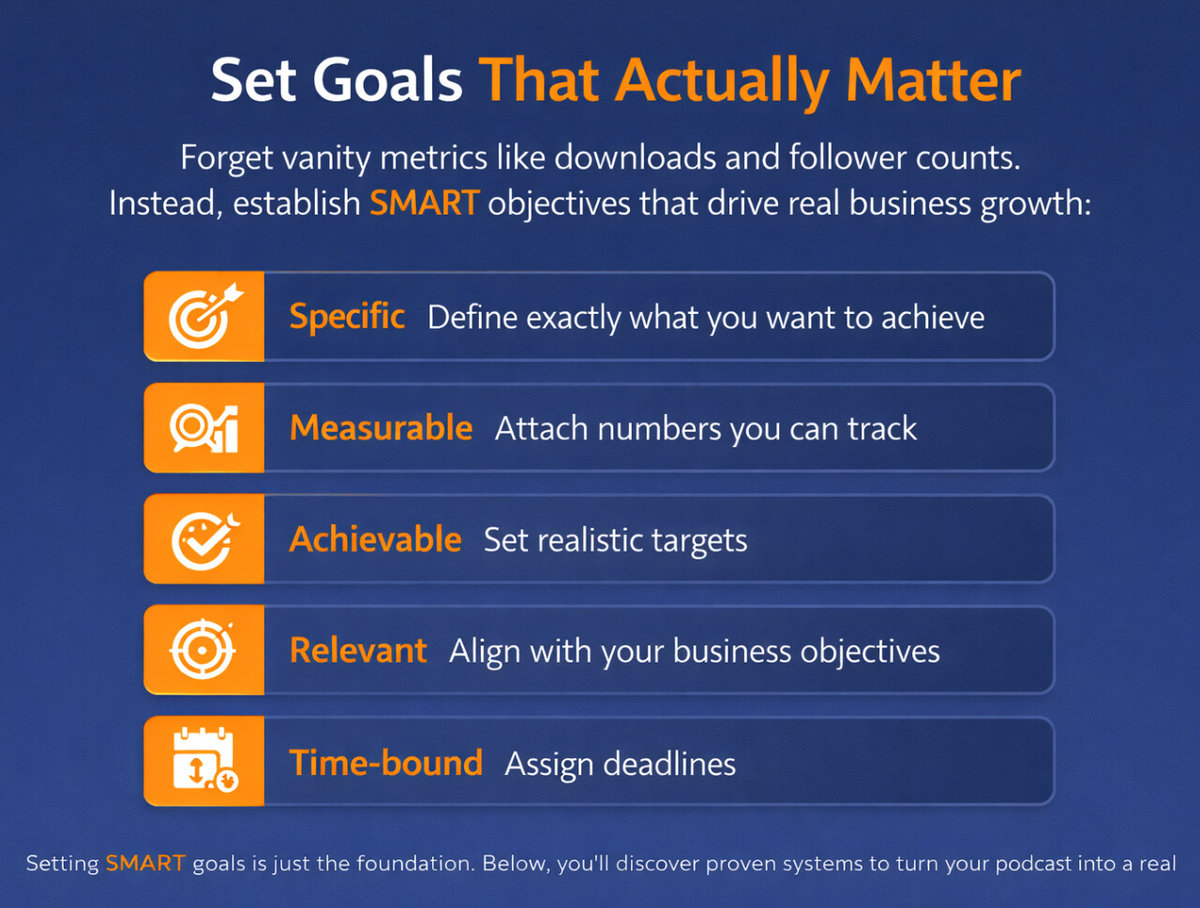
Forget vanity metrics like downloads and follower counts. Instead, establish SMART objectives that drive real business growth:
- Specific – Define exactly what you want to achieve
- Measurable – Attach numbers you can track
- Achievable – Set realistic targets
- Relevant – Align with your business objectives
- Time-bound – Assign deadlines
Setting SMART goals is just the foundation. To turn your podcast into a real growth engine, you need a proven system for execution—which is exactly what we cover in the [5 Podcasting Frameworks].
You'll learn how to turn interviews into referral engines and align your content strategy with actual deal-closing.
[Download the 5 Frameworks Today]
Example Podcast Goals That Drive Revenue:
- Sell five houses through podcast-generated leads
- Recruit a set number of agents to your brokerage
- Add new referral partners through your platform
These objectives become your "guiding stars." They shape every content decision and every guest you bring on. Your podcast can do more than fill airtime—it can close deals. (Need help structuring these goals? The [5 Podcasting Frameworks] includes ready-to-use templates.)
Use these so your podcast can do more than fill airtime. It can close deals.
The Difference:
Without Goals | With Goals |
Podcast stays a hobby | Podcast becomes a growth engine |
Content creation only | Content + relationship building |
Guesswork at every stage | Step-by-step guidance from start to finish |
Position Yourself as the Local Authority
When your show's vision aligns with your professional expertise, you become the trusted voice in your market:
- Breaking down complex mortgage trends
- Sharing local market insights
- Providing neighborhood-level expertise
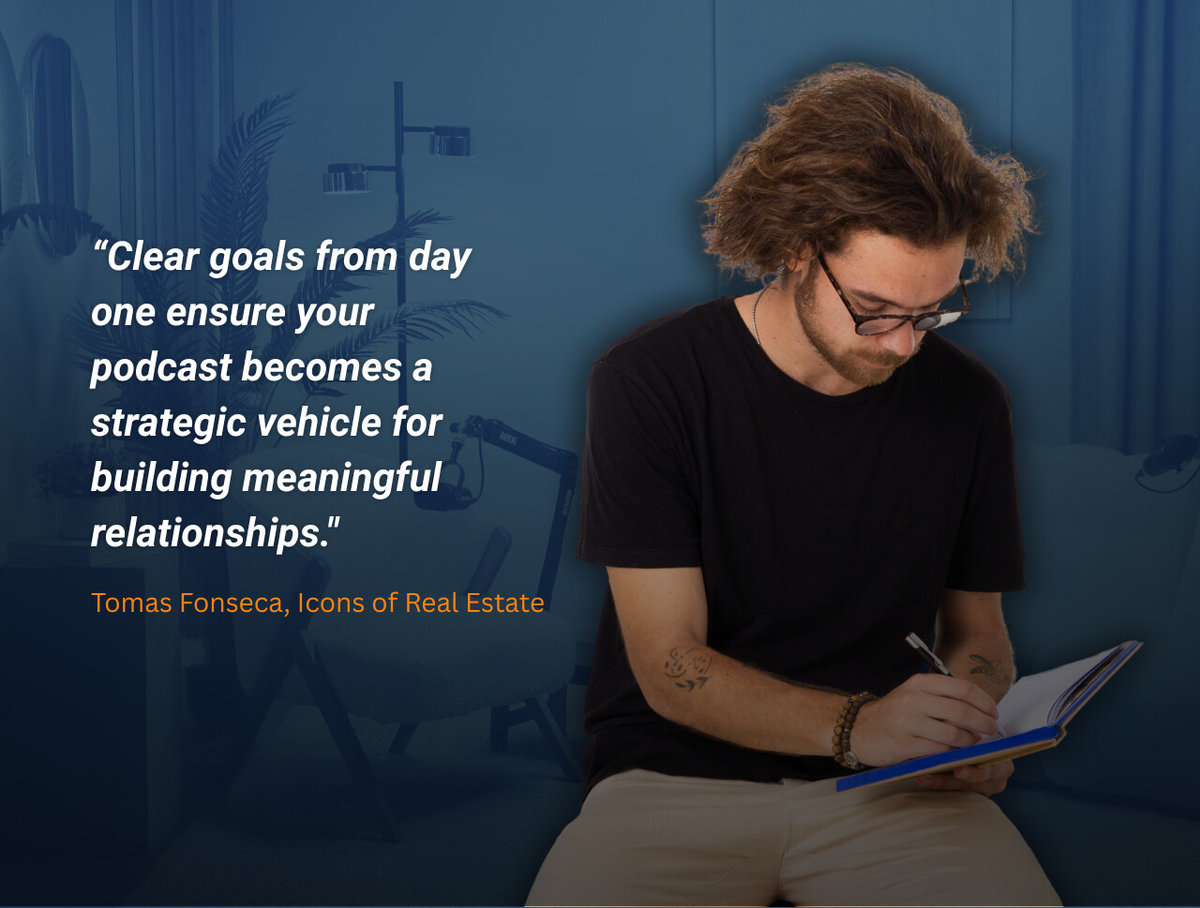
Clear goals from day one ensure your podcast becomes a strategic vehicle for building meaningful relationships and achieving long-term success.
Step 2: Plan Your Content
Before recording anything, plan your first 10-15 episodes. This prevents the "what do I talk about?" panic that kills momentum.
Content sources include:
- FAQs your clients ask repeatedly
- Common objections you hear in listing presentations
- Market trends and local news
- Guest expertise (lenders, inspectors, attorneys, contractors)
- Personal stories and lessons learned
How to format a real estate podcast episode:
- Hook (30-60 seconds): Why should someone keep listening?
- Introduction (1-2 minutes): Who you are, what you're covering
- Main content (15-30 minutes): The meat of the episode
- Call-to-action (30-60 seconds): What should listeners do next?
This structure keeps listeners engaged from start to finish.
How to Craft Engaging Content
- Make It Human
Don't just rattle off data points. Tell stories.
Instead of: "The median home price increased 8% year-over-year."
Try: "I had a buyer last week who lost three offers in a row. Here's what we changed to finally win."
Real-life examples make your content relatable and memorable. Data without context is just noise.
- Turn Your Podcast Into a Conversation
End every episode with a question. Prompt listeners to DM you, leave a review, or share their own experiences.
"Have you dealt with this? Send me a message on Instagram — I'd love to hear your story."
This transforms your podcast from a monologue into a dynamic conversation. And it gives you content ideas for future episodes.
For more like these, the [5 Podcasting Frameworks] includes episode templates, fill-in-the-blank scripts, and content calendars—everything you need to plan your first 15 episodes in a single sitting.
Real Estate Podcast Content Strategy Planning
Before you buy a microphone, you need a strategy. The most common reason podcasts fail isn't poor audio quality, it's lack of direction.
Choose Your Niche
The more specific, the better. Options include:
- Local market focus: "The [City Name] Real Estate Show"
- Investing: Fix-and-flip, BRRRR, syndications, passive investing
- Probate and estate sales: A highly underserved niche
- Team building and agent coaching: For those who want to attract recruits
- First-time buyers: Educational content for a specific demographic
Most real estate agents do not benefit from a nationwide or global podcast. If your goal is transactions, not attention, local authority wins every time.
A simple test: search “real estate podcast + your city.” In most markets, you’ll find very few—or none. That gap is the opportunity.
By launching a locally focused show, you can become the default voice of real estate in your market without competing against massive national brands.
Pro Tip: Pick Something You Can Actually Talk About for 50 Episodes
Your niche should sit at the intersection of two things: what you know and what you actually care about.
If you hate probate, don't launch a probate podcast just because it's underserved. You'll quit by episode 10.
But if you're passionate about helping first-time buyers navigate the process, and you've closed 100+ deals with them, that's your niche. The authenticity shows. And sustainability comes from genuine interest, not just market opportunity.
Choose something that showcases your expertise and keeps you engaged long enough to build momentum.
Define Your Target Audience
Who is your ideal listener? You should have identified this in step 1 already. So now, in the content planning phase, you add the specifics:
- First-time homebuyers in suburban Dallas
- Real estate investors looking for 1031 exchange strategies
- Agents who want to build teams
Your content should speak directly to their questions, fears, and aspirations.
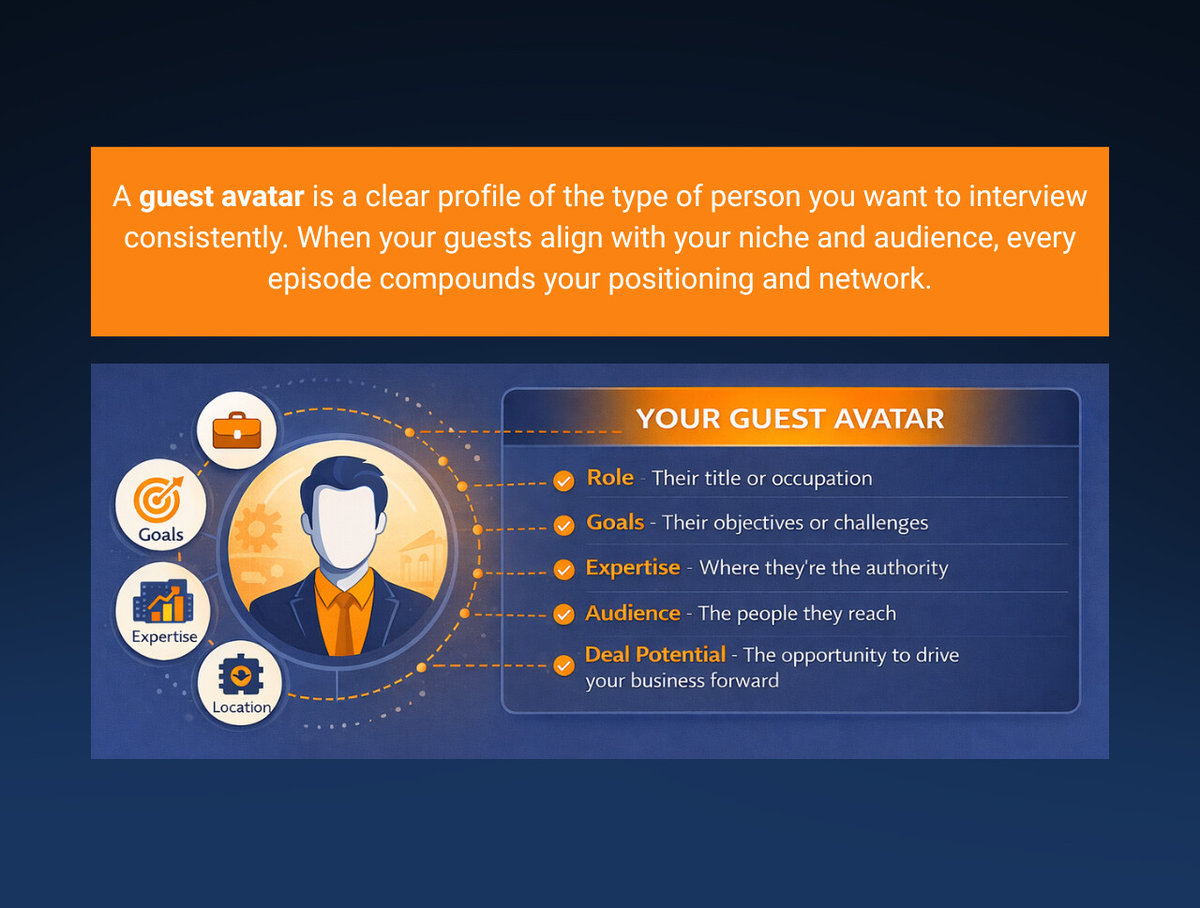
Define Your Guest Avatar
A podcast is a networking engine, not a talk show. The guests you invite should directly support your business goals.
Most real estate podcasts fail not because they can’t get guests—but because they invite the wrong ones. Random guests lead to random conversations, and random conversations don’t build authority, referrals, or deal flow.
Podcast Naming, Branding, and Cover Art
Your podcast name should be:
- Searchable (include "real estate" or your niche)
- Memorable
- Professional

Cover art matters more than you think. According to Podcast Insights, listeners often choose shows based on artwork before reading descriptions.
It creates your first impression. But your podcast needs more than good visuals.
Your Podcast Needs a Home Base
Beyond podcast platforms, build a simple website as your central hub.
What it does:
- Hosts episode archives and show notes
- Provides contact information
- Gives you credibility when guests google you before accepting an interview
A basic one-page site with episode links and a contact form is enough to start. You can expand later.
Decide on Format
- Solo episodes: You teach directly to the audience
- Co-hosted: Banter and chemistry with a partner
- Guest interviews: Leverage other people's audiences and expertise
- Hybrid: Mix all three based on content needs
Go Deeper on Goal-Setting
This article covers a lot of ground—from planning to equipment to distribution. But we can only scratch the surface here.
Want the full breakdown on establishing goals that drive real business growth?
The Content Planning Framework covers everything in detail:
- Defining your target audience with precision
- Setting SMART objectives tied to revenue
- Aligning your show's vision with your expertise
- Creating a strategic roadmap from episode one
Your podcast can do more than fill airtime. It can close deals.
This is just one of five comprehensive frameworks we've built to guide you through every stage of podcasting—from strategy and equipment all the way to distribution.
[Download All 5 Podcasting Frameworks Including The Content Planning Framework]
Icons of Real Estate has developed five proven frameworks for structuring real estate podcasts. These frameworks help agents plan content, book guests, and maintain consistency.
Key Insight: You don't need to go viral, you just need to be consistent and valuable to your market. A podcast with 200 downloads per episode can generate significant business if those 200 listeners are your ideal clients.
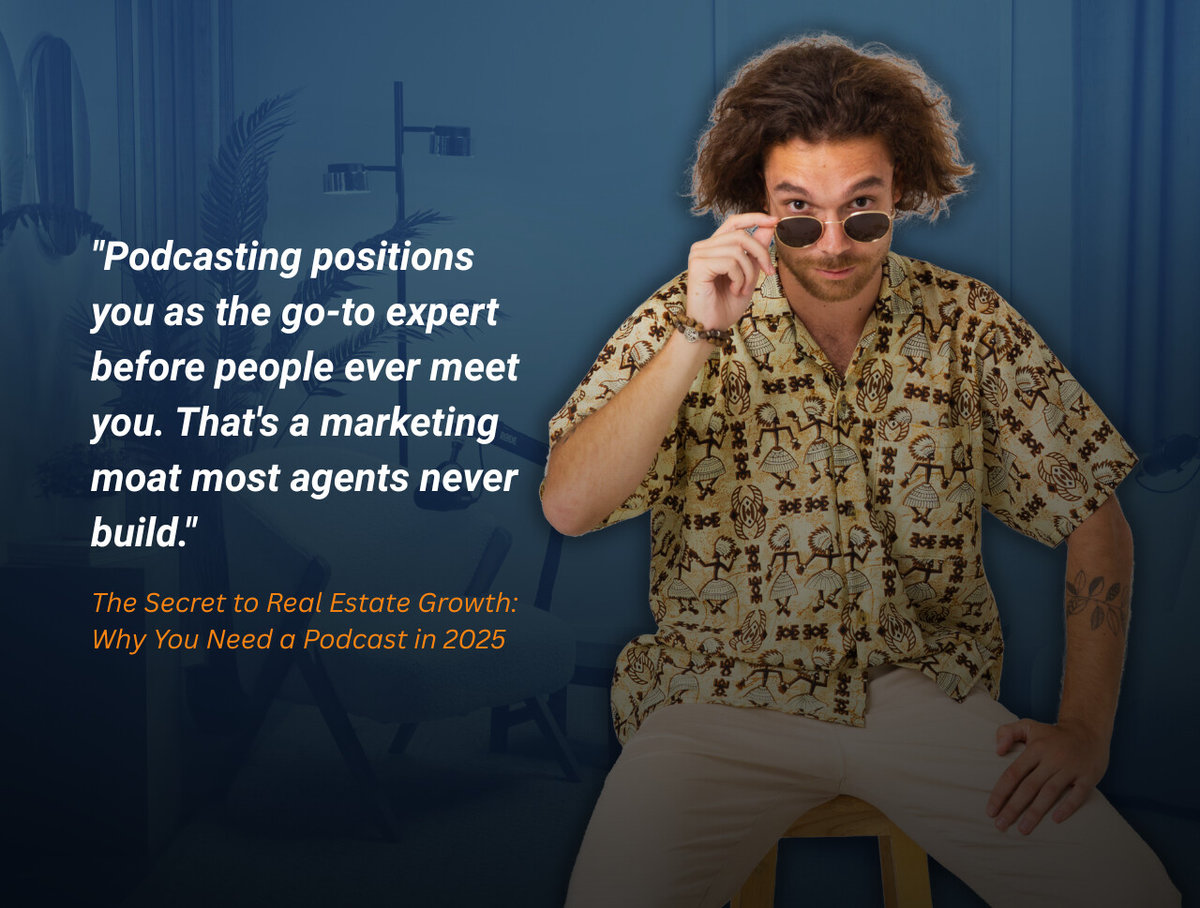
Watch The Secret to Real Estate Growth: Why You Need a Podcast in 2025 - EP 617
Step 3: Get the Right Equipment
You don't need a professional studio. Here's a real estate podcast equipment checklist:
Essential:
- USB Microphone: Audio-Technica ATR2100x or Samson Q2U (~$70-100)
- Headphones: Any closed-back headphones to monitor audio
- Recording Software: Zoom, Riverside.fm, or StreamYard
- Podcast Hosting Platform: Buzzsprout, Libsyn, Spotify
Nice to Have:
- Pop filter ($15-20)
- Boom arm or desk stand ($25-50)
- Acoustic treatment (foam panels or a quiet room)
Equipment Investment: You can launch a professional-sounding podcast for under $150.
👉 Related Article: Best Podcast Equipment for Real Estate Agents on a Budget
Step 4: Invite Guests and Schedule Recordings
Before you hit record, you need someone to talk to. And this is where podcasting becomes a networking superpower.
Who to invite:
Start with people who make sense for your audience and who benefit from the exposure:
- Lenders and mortgage brokers: They want access to your audience. You want financing expertise for your listeners. Win-win.
- Local business owners: Restaurant owners, gym owners, boutique shops — anyone who helps paint a picture of your market.
- Home inspectors, contractors, stagers: The people your clients need to know anyway.
- Past clients (with great stories): Nothing sells like real transformation stories.
- Other agents in non-competing markets: Referral relationships start here.
- Local experts: School district specialists, tax advisors, estate attorneys.
How to reach out:
Keep it simple. You're offering them a platform, not asking for a favor.
"Hey [Name], I host a podcast for [audience] in [market]. I'd love to feature you as a guest to talk about [topic]. It's a 30-minute conversation, super casual, and I'll handle all the editing and promotion. Interested?"
That's it. Most people say yes because being a podcast guest feels good and costs them nothing but time.
Scheduling logistics:
- Use a scheduling tool like Calendly or SavvyCal to eliminate the back-and-forth
- Batch your recordings — schedule 2-4 interviews in one week, then you've got a month of content
- Send guests a simple prep doc: 3-5 questions you'll cover, the format, and any tech instructions
Pre-interview prep:
- Research your guest — listen to other interviews they've done, check their LinkedIn, know their story
- Have 5-7 questions ready, but be willing to follow the conversation
- Send a reminder 24 hours before with the recording link
The guests you interview today become the referral partners, collaborators, and advocates who send you business for years. Don't underestimate this step — it's half the reason podcasting works.
Step 5: Record and Edit
Recording Tips:
- Use Riverside.fm for remote interviews with local recording (better audio quality)
- Have a run-of-show or bullet points for each guest
- Record in a quiet space with minimal echo
- Focus on storytelling, pacing, and energy, not perfection
Editing Tools:
- Descript: Edit audio like a document (great for beginners)
- GarageBand: Free for Mac users
- Audacity: Free, open-source option
Editing Best Practices:
- Remove long pauses and "ums" (but keep it natural)
- Add intro/outro music
- Normalize audio levels
- Include a call-to-action in your outro
Step 6: Publish and Host
Choose a Hosting Platform: Your host stores your audio files and distributes them to directories. Popular options include:
- Buzzsprout – Beginner-friendly, great analytics
- Libsyn – Industry standard, robust features
Syndicate to Major Platforms:
- Apple Podcasts
- Spotify
- YouTube (upload video versions)
Release Schedule: Consistency matters more than frequency. Choose a schedule you can maintain:
- Weekly (recommended for growth)
- Bi-weekly (sustainable for busy agents)
- Monthly (minimum for staying top-of-mind)
Podcasting for Beginners: Different Ways to Start a Podcast
How to Start a Podcast with No Audience
Nobody starts with an audience. Every successful podcaster launched to crickets.
But here's how you grow from zero to 40+ referral partners in one year.
Your Guests Are Your Distribution
Instead of going solo, interview local lenders, inspectors, contractors, and business owners to tap into their audience. Each guest shares the episode with their network.
52 weekly episodes = 52 guests × 1,000 average network size = 52,000 people reached without ads.
Use Collaborator Features
Tag guests on Instagram Collab Posts and YouTube Collaborators. The content appears on both profiles automatically.
One clip reaches 2-5x more people than posting solo.
Build Referrals, Not Virality
40 guests become referral partners in year one.
Each sends one referral over five years. At 20% conversion: 8 deals.
But here's what compounds: those clients refer their friends. Your guests introduce you to their colleagues. Year two, you're not starting from zero. You're building on 40 established relationships.
How to Start a Podcast on Spotify
Spotify is one of the largest podcast platforms, with 26% of U.S. podcast listeners using it as their primary app.
Getting your podcast on Spotify is straightforward. You can either host directly with Spotify for Creators (free) or submit your RSS feed from another hosting platform like Buzzsprout or Libsyn.
(If you’re not familiar with RSS feed - It’s basically a link that automatically updates podcast platforms whenever you publish a new episode.)
The setup takes about 30 minutes, and your show goes live within 24-48 hours.
👉 Want the full step-by-step guide? Read How to Start a Podcast on Spotify for detailed instructions on hosting options, RSS submission, and optimizing your show for Spotify's algorithm.
How to Start a Podcast on YouTube
YouTube isn't just for video — it's now the #1 podcast discovery platform.
33% of podcast listeners prefer to find new shows on YouTube over Spotify or Apple Podcasts. For Gen Z, that number jumps to 84%.
You can launch a podcast on YouTube for free using tools you already own:
- Your smartphone
- Free recording software like OBS Studio or Audacity, and
- Canva for thumbnails.
The platform also offers built-in monetization through ad revenue, so you don't need to chase sponsorships.
👉 Ready to launch on YouTube? Read How to Start a Podcast on YouTube for equipment recommendations, recording workflows, and strategies for using YouTube Shorts to grow your audience.
How to Start a Podcast on Apple Podcasts
Apple Podcasts remains the go-to platform for many listeners, holding 14% of the U.S. podcast market.
To get your podcast on Apple, you'll need an RSS feed from your podcast host (Buzzsprout, Libsyn, Spotify for Creators, etc.) and a free Apple ID.
Submission takes about 10 minutes, and Apple typically approves shows within 24-48 hours.
Once live, your podcast is discoverable to millions of Apple users searching for real estate content in their area.
👉 Get the complete walkthrough: Read How to Start a Podcast on Apple Podcasts for submission steps, artwork requirements, troubleshooting common approval issues, and tips for optimizing your show for Apple's search algorithm.
Podcast Marketing for Real Estate Agents
Creating great content is only half the battle. Real estate podcast marketing is key to growing visibility and reach.
Promoting on Social Media
Social media amplifies your podcast's reach. Use tools like Headliner or in-house editors to create:
- Audiograms: Short video clips with waveforms
- Quote graphics: Highlight guest insights
- Reels and Stories: Tease upcoming episodes
Best Practices:
- Post clips natively on each platform (don't just share links)
- Tag guests to expand reach
- Use relevant hashtags (#RealEstatePodcast, #RealtorTips, #[YourCity]RealEstate)
Cross-Promotion with Guests
Your guests have their own audiences. Maximize this by:
- Sending guests pre-made graphics and clips to share
- Asking guests to announce the episode on their social channels
- Featuring guest quotes or testimonials in your marketing
- Write the caption for them — most people will copy-paste if you make it easy
- Ask guests to announce the episode on their social channels
- Feature guest quotes or testimonials in your marketing
Use platform collaboration features:
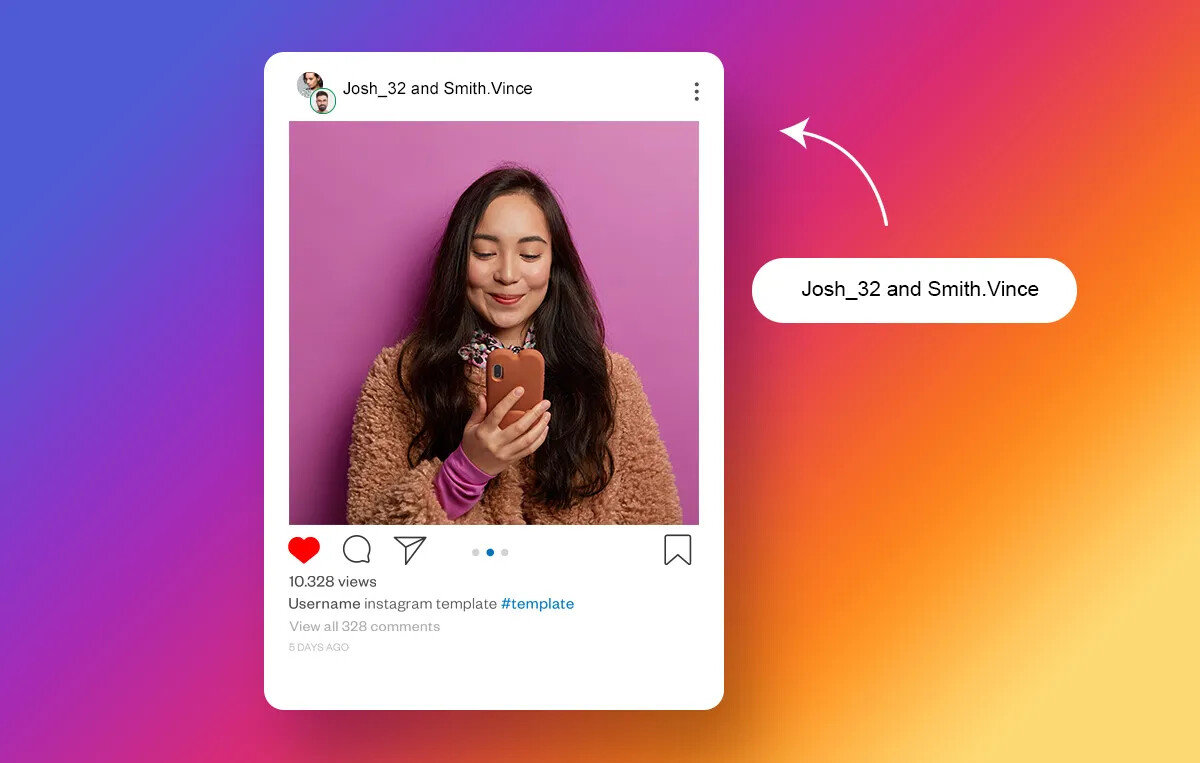
Instagram and YouTube both have collaborator tools that most podcasters completely ignore — and they're game-changers.
Source: https://www.socialpilot.co/blog/instagram-collab-post
- Instagram Collab Posts: When you post a Reel or carousel from your episode, invite your guest as a collaborator. The post appears on both profiles, reaches both audiences, and combines engagement. You're not asking them to reshare — you're putting the content directly in front of their followers.
- YouTube Collaborators: Tag your guest as a collaborator on the video. YouTube surfaces this to their subscribers and in their activity feed. Again — you're borrowing their audience without requiring them to do anything.
These features exist specifically for this purpose. One podcast clip with a collaborator tag can reach 2-5x the audience of posting solo.
The mindset shift:
Stop thinking of promotion as something you do alone. Every guest you interview should become a distribution partner for that episode.
If you interview 4 guests per month and each one shares to their audience, you've multiplied your reach without spending a dollar on ads.
Email & Referral Loops
Email Integration:
- Embed episodes in your regular newsletter
- Add podcast links to lead nurture sequences
- Include "Listen to the Podcast" in your email signature
Referral Opportunities:
- Share episodes in private Facebook groups or team channels
- Ask satisfied guests to refer other potential guests
- Create a "Guest Referral" program with incentives
Content Repurposing
One podcast episode can fuel weeks of content:
Episode Component | Repurposed Content |
| Full episode | YouTube video, blog post |
| Guest quotes | Instagram graphics, Twitter posts |
| Key insights | LinkedIn articles, newsletter features |
| Audio clips | Reels, TikToks, audiograms |
| Transcript | SEO blog post, show notes |
Calls-to-Action
Every episode should include a clear CTA:
- "Schedule a free consultation at [website]"
- "Download our [lead magnet] at [URL]"
- "Leave a review on Apple Podcasts"
- "DM me on Instagram @[handle]"
Monetization & Lead Generation
Understanding how to monetize a real estate podcast goes beyond sponsorships. For most agents, the real ROI comes from lead generation and relationship building.
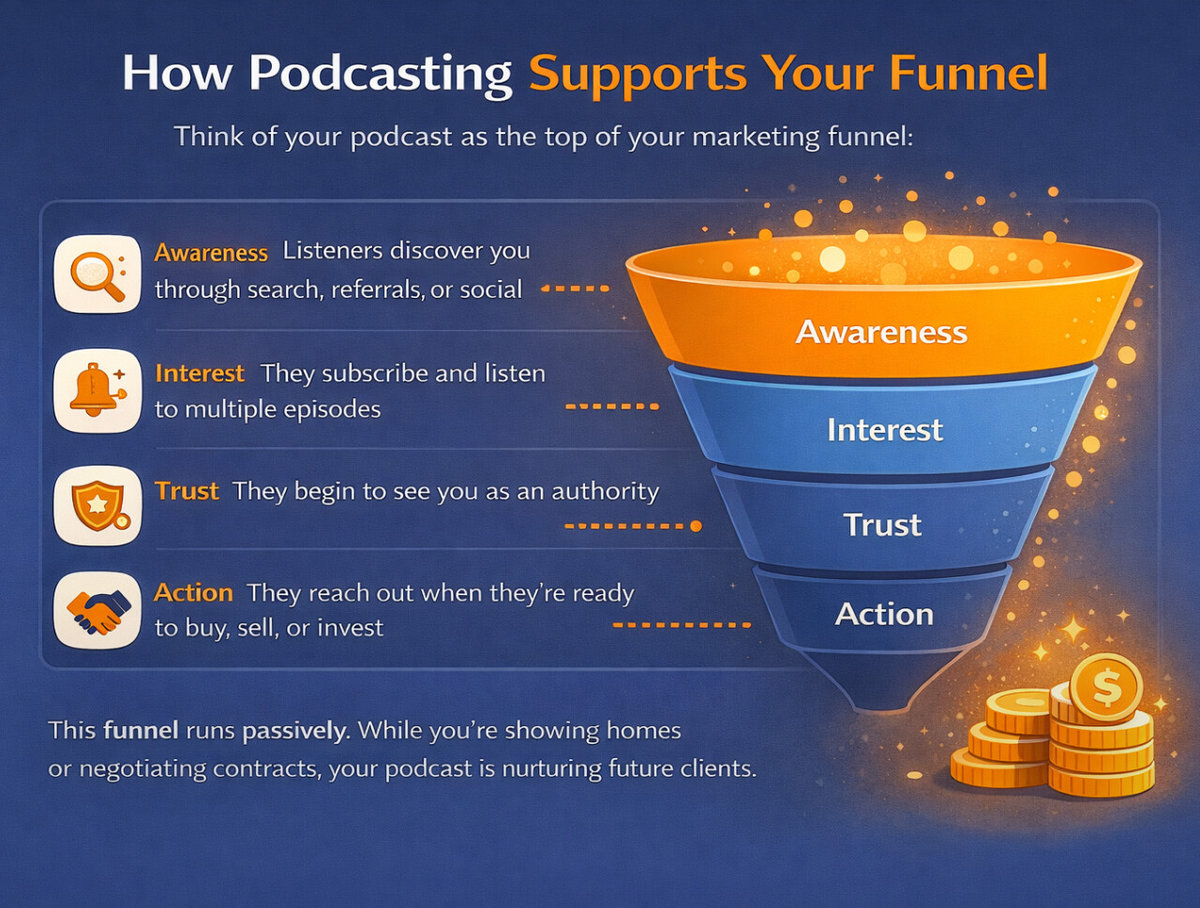
How Podcasting Supports Your Funnel
Think of your podcast as the top of your marketing funnel:
- Awareness: Listeners discover you through search, referrals, or social
- Interest: They subscribe and listen to multiple episodes
- Trust: They begin to see you as an authority
- Action: They reach out when they're ready to buy, sell, or invest
This funnel runs passively. While you're showing homes or negotiating contracts, your podcast is nurturing future clients.
Building Partnerships
Podcasting opens doors to strategic partnerships not accessible through cold outreach:
Guest-Based Partnerships:
- Invite local business owners (restaurants, NGOs, government entities, tourism orgs, contractors)
- Real estate industry partners, Feature lenders, title companies, financial planners, insurance agents, contractors, home inspectors, real estate attorneys, CPAs, and estate planners
- Other top-producing real estate agents, real estate investors
Revenue Opportunities:
- Affiliate partnerships with service providers (home warranty companies, moving services, staging companies)
- Referral relationships with out-of-area agents who discover your show
- Co-hosted events or workshops with past guests
Listing & Market Content
Use your podcast to create listing-related content:
- Property walkthrough episodes: Discuss features, neighborhood, and investment potential
- Market update episodes: Weekly or monthly market data and trends
- Buyer education episodes: Explain the buying process, financing options, and local regulations
This positions you as the market expert while creating shareable content for your listings.
Ready to launch your podcast? 👉 Explore Icons's Podcast Production Services
Mistakes to Avoid When Podcasting
Even the best intentions can lead to common pitfalls. Here are the mistakes that derail most real estate podcasts:
1. Prioritizing Gear Over Content Consistency
A $500 microphone won't save a boring podcast. Invest in content planning first, then upgrade equipment as you grow.
2. Recording Without Planning or Guest Prep
Winging it leads to rambling episodes that lose listeners. Always have:
- A bullet-point outline
- Prepared questions for guests
- A clear topic or theme
3. Forgetting to Follow Up with Guests
Your guests are potential referral partners. After recording:
- Send a thank-you email
- Share the episode link when published
- Add them to your networking list
4. Not Repurposing the Content
If you're only publishing on podcast platforms, you're leaving value on the table. Repurpose every episode into multiple content pieces.
5. Giving Up After 3-5 Episodes
According to Amplifi Media, 90% of podcasts don't make it past episode 3. The agents who succeed are the ones who commit to at least 20-30 episodes before evaluating results.
Podcast longevity follows predictable drop-off points. Industry data shows that 90% of podcasts never make it past episode three, and of the remaining shows, 90% fail before episode twenty. These two moments—episode three and episode twenty—are the real milestones. If you cross both, you’re no longer “trying podcasting.” You’re operating in the top 1% of active podcasts. The agents who win don’t win because of talent or gear. They win because they simply stay in the game long enough for momentum to compound.
👉 Related Article: Common Podcasting Mistakes for Realtors
💡 Real Estate Podcast Tip: Set a minimum commitment of 25 episodes before deciding if podcasting "works." Most agents quit before they see results.
Real Estate Podcast Examples & Inspiration
Learning from real estate podcast examples can accelerate your success. Here are shows worth studying:
The Icons of Real Estate Podcast Network
Icons has launched and supports over 100 podcasts across the U.S., including:
- Pro Realtor Podcast: Tactical advice for agents at every level
- Real Moms of Real Estate: Balancing family life with real estate careers
- [Additional network shows]: Various niche-focused programs
👉 Browse the Full Podcast Directory
Success Stories from Icons Network
Shay Spitz: Turned podcast guest relationships into a 70-acre land deal and multi-unit development opportunity.
Matias Baker: Achieved #1 Google ranking for "probate real estate podcast" and broke through a $20M production plateau.
These aren't outliers, they're examples of what's possible when you commit to consistent, valuable content.
👉 Read Why Top Real Estate Professionals Choose Icons of Real Estate
👉 View the Icons Podcast Network
Get Started: Launch Your Podcast with Icons of Real Estate
You don't have to figure this out alone. Icons of Real Estate provides end-to-end podcast services for agents and brokers:
What Icons Provides:
✅ Podcast Strategy: Niche selection, content planning, and positioning
✅ Naming & Branding: Professional podcast name, cover art, and brand guidelines
✅ Guest Booking: Access to a network of potential guests and interview coaching
✅ Editing & Publishing: Professional audio editing and syndication to all major platforms
✅ Coaching & Analytics: Ongoing support and performance tracking
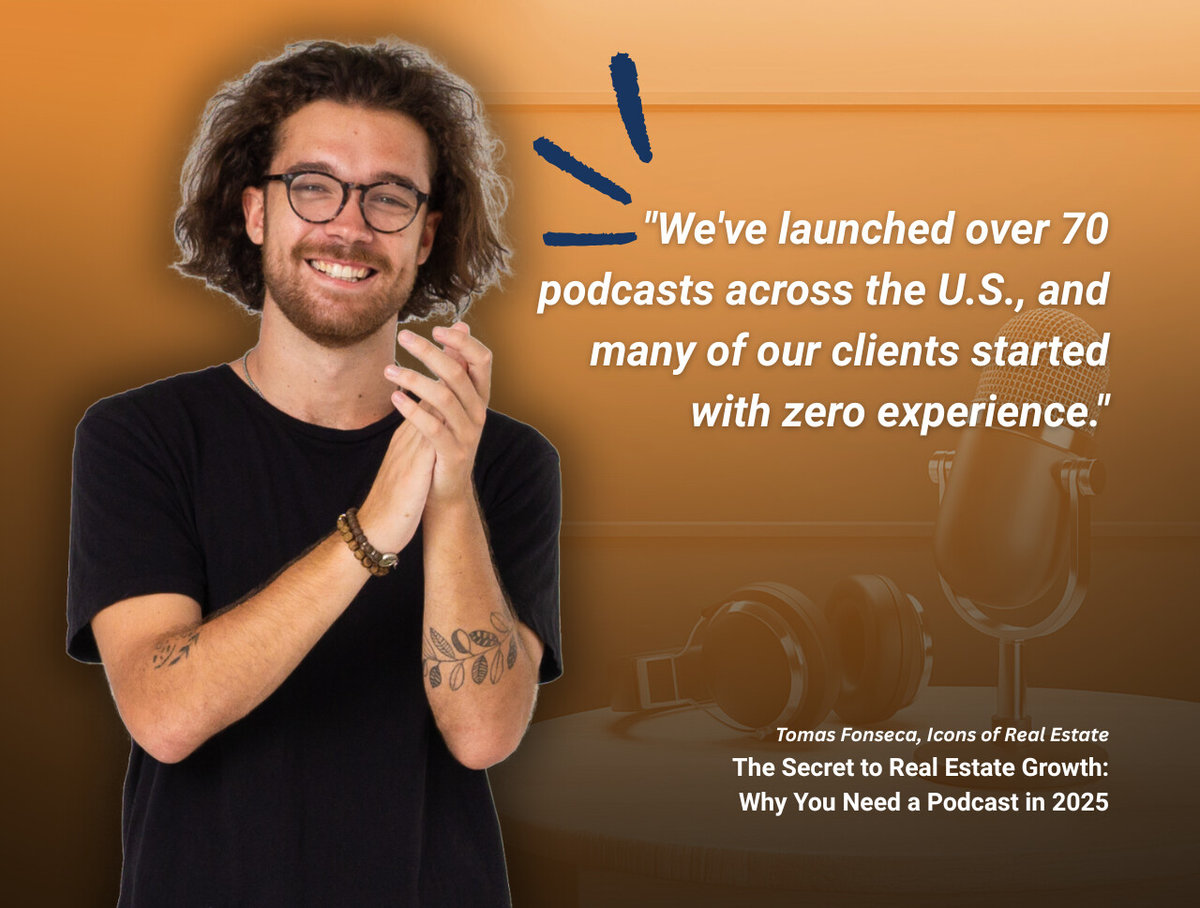
"We've launched over 70 podcasts across the U.S., and many of our clients started with zero experience." – The Secret to Real Estate Growth: Why You Need a Podcast in 2025
👉 Launch Your Podcast with Icons of Real Estate
FAQs About Real Estate Podcasting
At a minimum, you need:
- A USB microphone ($70-100)
- Recording software (Zoom or Riverside)
- A podcast hosting platform (Buzzsprout or Libsyn)
Total startup cost: under $150.
Weekly is ideal for growth, but bi-weekly is sustainable for busy agents. The most important factor is consistency, pick a schedule you can maintain for at least 25 episodes.
That's the point! A podcast helps you build an audience. Start by interviewing local business owners, past clients, and industry professionals. Each guest brings their own network to your show.
Absolutely. Most agent-hosted podcasts require 2-4 hours per week:
- 1 hour for recording
- 1-2 hours for prep and post-production
- 30-60 minutes for promotion
With a production partner like Icons, you can reduce this to just the recording time.
Conclusion
Real estate podcasting isn't a trend, it's a proven strategy for building connection, consistency, and content that converts. The agents and brokers who embrace podcasting today are building audiences that will pay dividends for years.
You don't need to be famous. You don't need professional broadcasting experience. You just need to be valuable to your audience.
Your Next Steps:
- 👉 Browse the Icons Podcast Directory to see what's possible
- 👉 Explore the Client Podcast Network for inspiration
- 👉 Book a Podcast Strategy Session to get started
The best time to start a podcast was last year. The second-best time is now.